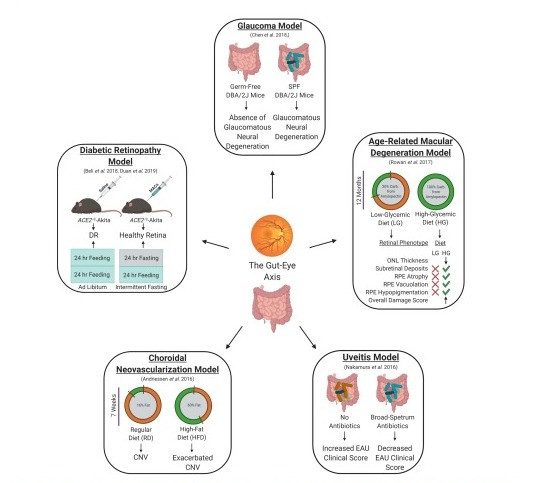
The Gut-Eye Axis: Lessons Learned from Murine Models
R$ 0,00

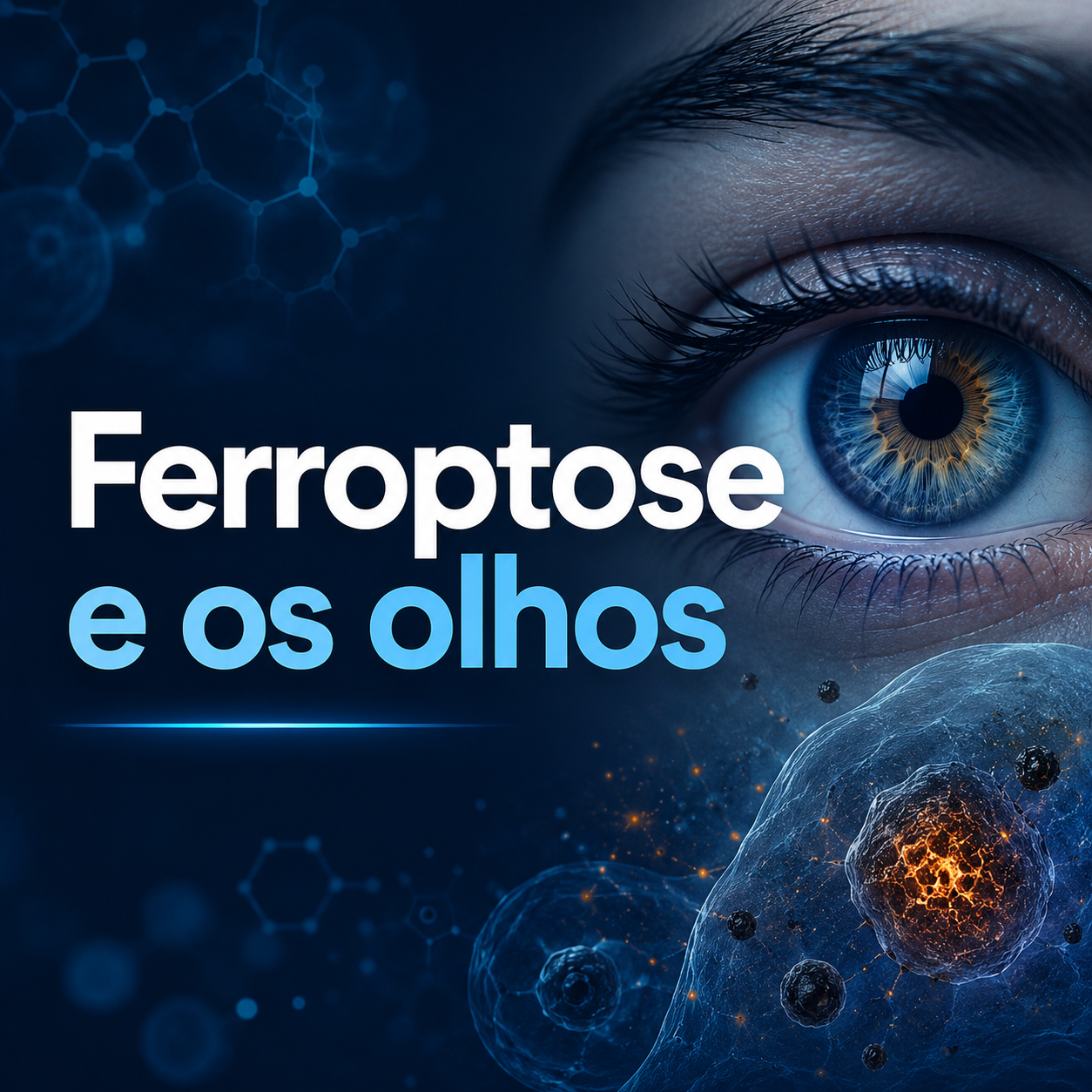
Programmed cell death is an essential process for maintaining tissue health. In recent years, a new form of this process, called ferroptosis, has attracted great interest from the scientific community because of its role in several degenerative diseases, including eye diseases.
Unlike apoptosis and other classic mechanisms of cell death, ferroptosis is characterized by excessive accumulation of intracellular iron, intense lipid peroxidation and the collapse of the cell's antioxidant systems. This set of changes leads to the loss of cellular integrity and the progressive degeneration of tissues that are highly dependent on metabolic balance, such as the retina.
Recent evidence shows that ferroptosis plays a key role in damage to cells essential for vision, such as the retinal pigment epithelium (RPE), photoreceptors and ganglion cells. Moreover, this process does not occur in isolation: there is intense interplay between ferroptosis, oxidative stress, inflammation and the immune response, creating a microenvironment that favors the progression of diseases such as age-related macular degeneration, diabetic retinopathy, glaucoma, cataract and other eye disorders.
More than understanding a new mechanism of cell death, studying ferroptosis represents an opportunity to develop innovative therapeutic strategies. The use of antioxidants, iron chelators, natural compounds, GPX4 modulators and advanced drug delivery systems, such as nanoparticles and hydrogels, opens new perspectives for preserving visual function and slowing the progression of diseases previously considered inevitably degenerative.
Ferroptosis is no longer merely a concept in cell biology; it has become one of the main targets of regenerative medicine and modern ophthalmology, bringing basic research closer to clinical practice and offering new possibilities for preserving vision.