
Platelet-Rich Plasma (PRP) in Cerebral Palsy: a case report that opens new perspectives for regenerative medicine
Regenerative medicine has been transforming the way we view the treatment of many diseases. Among the therapies that attract the most scientific interest is Platelet-Rich Plasma (PRP), widely used in orthopedics, dentistry and sports medicine for its potential to stimulate the natural processes of tissue repair.
In recent years, researchers have begun to investigate a new possibility: the use of PRP in neurological diseases, taking advantage of the growth factors present in platelets to stimulate mechanisms of neuroprotection and neuroplasticity.
A study published in the journal American Journal of Case Reports presented a clinical case that caught the attention of the scientific community by describing the progress of a child with cerebral palsy treated with an intravenous infusion of PRP.
What is cerebral palsy?
Cerebral palsy is a permanent neurological condition caused by an injury to the developing brain, usually occurring during pregnancy, at birth or in the first months of life.
One of the most frequent causes is perinatal hypoxia, a situation in which the baby's brain receives an insufficient amount of oxygen during birth.
Depending on the extent of the injury, different manifestations may arise, such as:
motor impairments;
spasticity;
cognitive difficulties;
developmental delay;
language impairments;
seizures.
Although current treatments can significantly improve quality of life, there is still no therapy capable of fully regenerating injured brain tissue.
What is Platelet-Rich Plasma (PRP)?
PRP is obtained from the patient's own blood. After a centrifugation process, the platelets are concentrated in a small volume of plasma.
Platelets do not only take part in blood clotting. They store biologically active proteins known as growth factors, which are responsible for stimulating communication between cells and activating natural tissue repair mechanisms.
The main factors present in PRP include:
PDGF (Platelet-Derived Growth Factor), related to cell proliferation and tissue regeneration;
VEGF (Vascular Endothelial Growth Factor), important for the formation of new blood vessels and the metabolic support of tissues;
TGF-β (Transforming Growth Factor Beta), involved in modulating inflammation and wound healing;
IGF-1 (Insulin-like Growth Factor 1), associated with neuronal survival, brain plasticity and cell development.
These molecules have attracted the interest of regenerative medicine because of their potential to stimulate biological processes essential for tissue repair.
The published study
The authors reported the case of a 6-year-old boy, diagnosed with cerebral palsy at two months of age, resulting from perinatal hypoxia, who presented with spastic tetraparesis and moderate cognitive impairment. As part of the therapeutic approach, a single intravenous infusion of 25 mL of Platelet-Rich Plasma (PRP) was performed.
The patient was followed up through clinical, laboratory and radiological assessments carried out before the procedure and again after 3 and 6 months, allowing the clinical progress to be analyzed over time. It is worth noting that this treatment was carried out as a case report and was not part of a controlled clinical trial. The intervention was previously authorized by the child's legal guardians.
To prepare the PRP, 60 mL of autologous blood were collected. Before the infusion, the material underwent a rigorous laboratory evaluation, including biochemical analyses, a complete blood count, serology tests and measurement of the main plasma growth factors, in order to ensure the safety and quality of the product used.
The Platelet-Rich Plasma was obtained through a single centrifugation protocol, performed at 3,500 rpm for 30 minutes at 18 °C, resulting in a high concentration of platelets and growth factors, which were then administered intravenously.
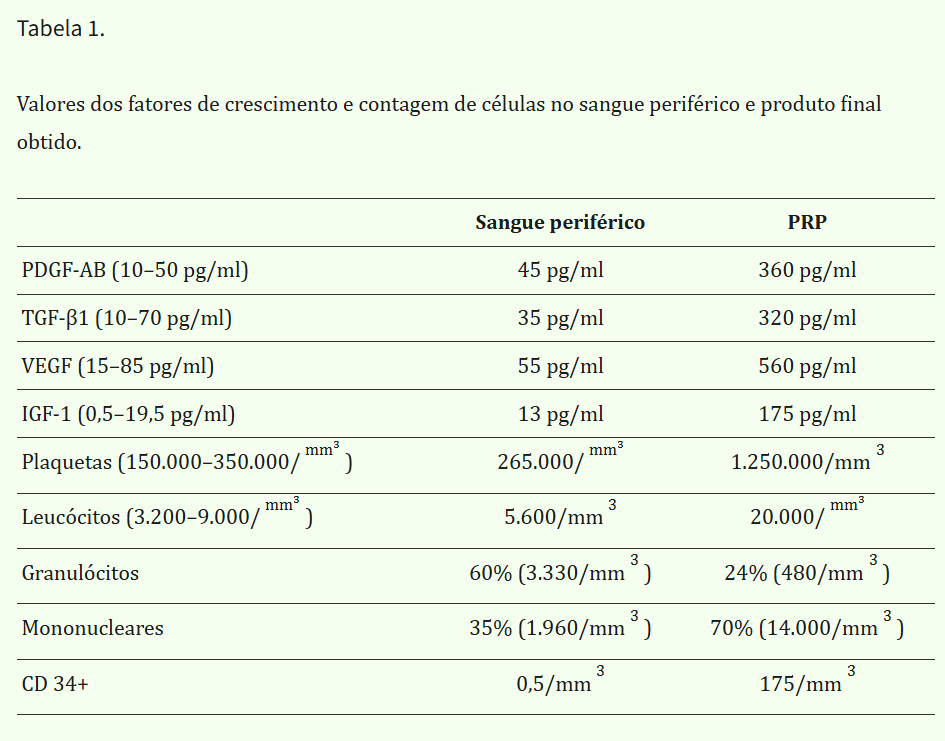
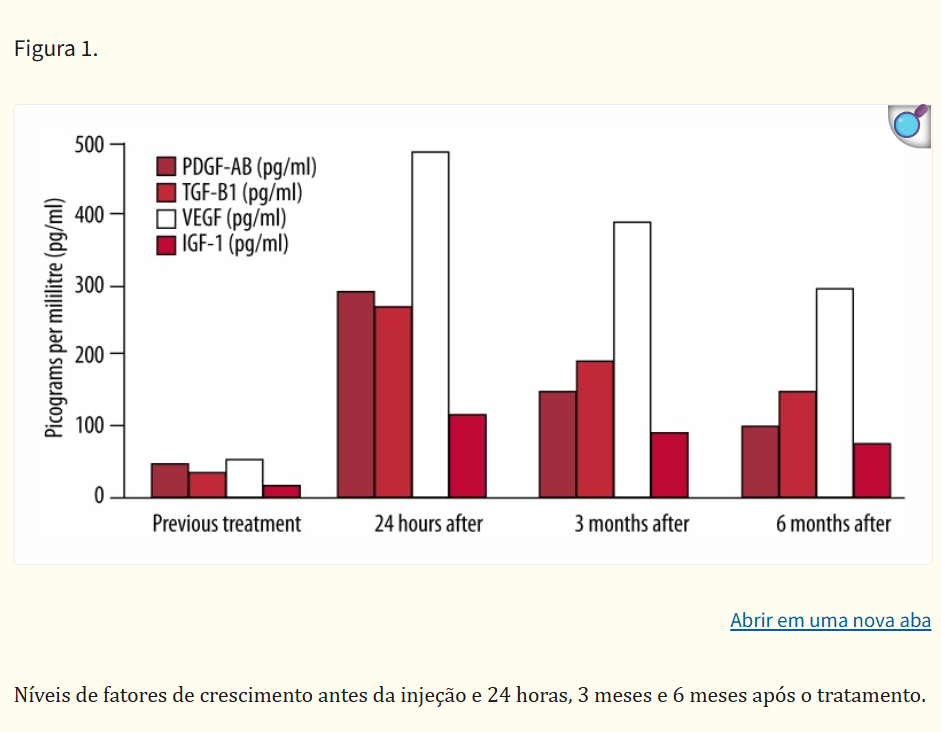
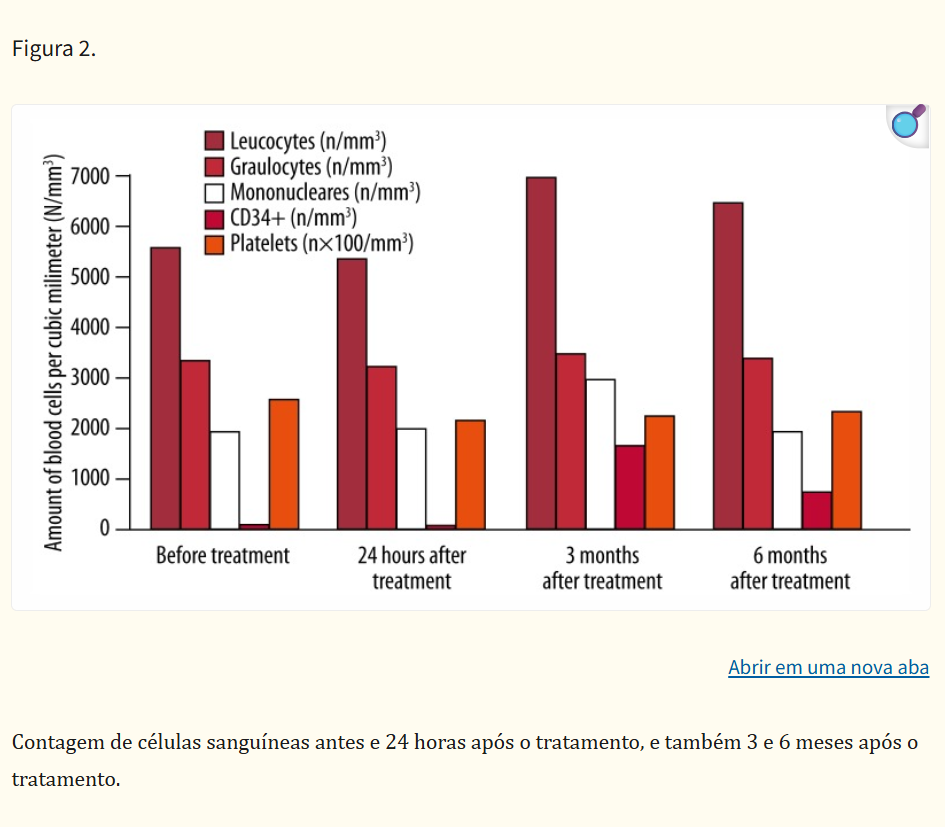
After the PRP was prepared, peripheral venous access was obtained and the intravenous infusion took place within 30 minutes of its preparation. Laboratory follow-up included measurement of serum growth factors using the ELISA technique and a leukocyte count, performed before the application, after 24 hours and at the 3- and 6-month follow-ups. The results of these analyses are presented in Figures 1 and 2.
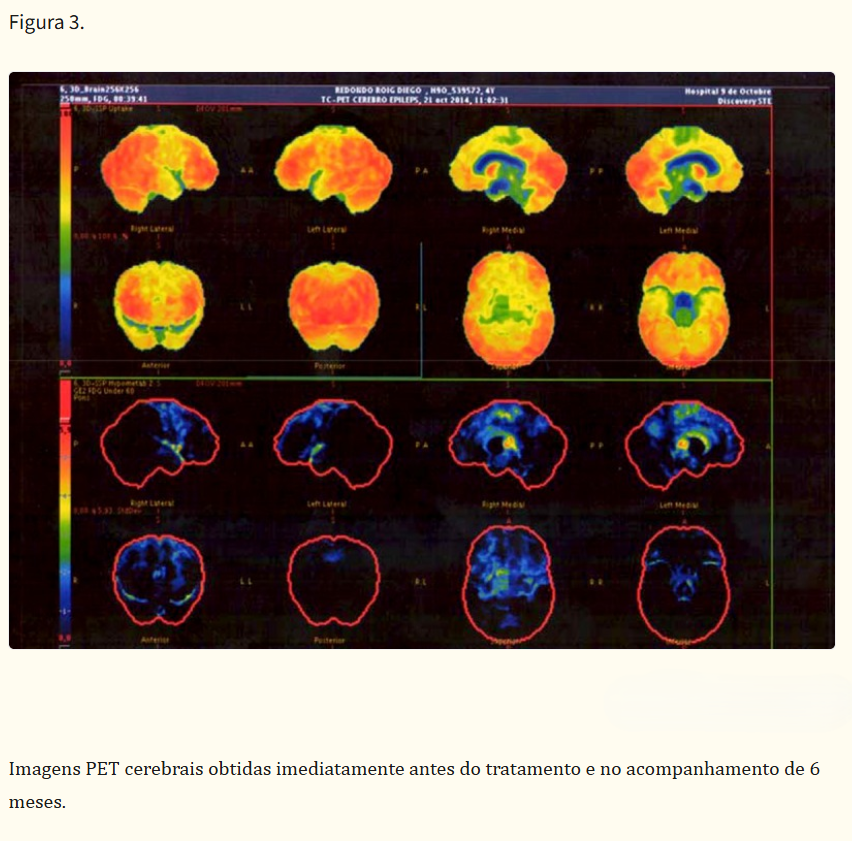
To assess neurological progress, the patient was re-evaluated 3 and 6 months after treatment using standardized cognitive scales, including Bayley, Battelle, MSCA, Kaufman ABC and Stanford-Binet, comparing the results with the assessments performed before the PRP infusion. In addition, brain PET scans were performed immediately before the procedure and again after 6 months, allowing brain metabolic activity to be analyzed. The images and the respective reports are presented in Figure 3.
Clinical, laboratory and imaging follow-up showed a favorable progression after the PRP infusion. Plasma growth factor levels peaked 24 hours after treatment and remained elevated, above baseline values, during the follow-ups at 3 and 6 months. At the same time, the patient showed progressive improvement in symptoms, mainly in the cognitive and neuropsychomotor domains, evidenced by a greater ability to eat solid foods, improved motor coordination, language development with the production of two- and three-syllable words, and better visual tracking of moving objects.
These improvements were already noticeable at the three-month assessment and continued to progress until the sixth month. Brain PET assessment revealed a diffuse increase in glucose metabolism throughout the cerebral cortex, a finding consistent with neuronal plasticity processes, with no significant changes in deep brain structures such as the hippocampus and the amygdala. The images and the respective reports can be seen in Figure 3.
Discussion
Advances in regenerative medicine have transformed many areas of clinical practice, offering less invasive therapeutic alternatives with a low rate of adverse effects and the potential to stimulate the body's natural tissue repair mechanisms. Despite the promising results, the authors stress that well-designed clinical trials are still needed to establish standardized protocols and confirm the efficacy of these therapies in different medical applications.
Currently, the most consistent evidence on the use of Platelet-Rich Plasma (PRP) is concentrated in dentistry, especially in the regeneration of the alveolar bed after surgical procedures, and in orthopedics and traumatology, where PRP is used to treat arthropathies, tendinopathies, and ligament and meniscal injuries. Although its use is expanding into other specialties, many of these applications are still based on preliminary scientific evidence.
Among the most promising fields for the use of PRP are neurology, neuroendocrinology and neurorehabilitation. This is because platelet-derived growth factors have neuroregenerative, neuroprotective, anti-apoptotic, immunomodulatory and neurotrophic properties, capable of supporting mechanisms related to neuronal survival, brain plasticity and nerve tissue repair. These characteristics make PRP a potentially interesting strategy for diseases associated with neuronal loss, such as Alzheimer's disease, stroke, spinal cord injuries and cerebral palsy resulting from hypoxia or anoxia.
In the specific case of cerebral palsy, spontaneous recovery is uncommon, since hypoxia causes permanent damage to neurons and glial cells. Previous studies have shown that patients treated with growth hormone (GH) showed functional improvement, mainly in cognitive functions, including memory, language, the ability to perform more complex tasks and the acquisition of new skills. These benefits are related to increased growth factors such as IGF-1, PDGF and TGF-β, molecules that play an important role in neuroprotection, cell differentiation, chemotaxis and neuroplasticity.
However, growth hormone therapy has important limitations, such as its high cost, the need for repeated administrations and potential adverse effects. In this context, PRP emerges as a promising alternative, as it naturally concentrates these growth factors in an autologous product obtained from the patient. According to the authors, a single application can maintain elevated plasma levels of these proteins for a prolonged period, producing a biological effect similar to that observed with growth hormone, but at a lower cost and without the potential risks associated with the prolonged use of synthetic factors. Even so, the researchers emphasize that more robust clinical studies are essential to confirm its efficacy and safety in patients with neurological diseases.
Conclusion
The published case report shows that intravenous administration of Platelet-Rich Plasma was well tolerated and was associated, in this patient, with clinical improvement and brain metabolic changes observed on imaging.
However, these results should be interpreted with caution. The study represents initial evidence, which reinforces the need for broader clinical research to determine the real efficacy, safety and applicability of PRP in patients with cerebral palsy.
As new evidence is produced, regenerative medicine may expand its role in the treatment of neurological diseases, offering new perspectives for patients and healthcare professionals.
Scientific reference
Alcaraz J, Oliver A, Sánchez JM. Platelet-Rich Plasma in a Patient with Cerebral Palsy. American Journal of Case Reports. 2015;16:469-475. PMCID: PMC4509427.

Comments