
PRP Eye Drops for Post-LASIK Dry Eye
Analysis of the Alió et al. (2017) study | Autologous PRP Eye Drops for Post-LASIK Dry Eye
Summary of the Scientific Evaluation
The prospective clinical study conducted by Jorge L. Alió et al. (2017), published in the Journal of Ophthalmology, evaluated the efficacy and safety of Autologous Platelet-Rich Plasma (PRP) eye drops as monotherapy for the treatment of chronic post-LASIK Ocular Surface Syndrome (OSS).
85%
Overall Symptomatic Improvement in Patients
89.6%
Reduction/Resolution of Keratitis (CFS)
93.3%
Improvement in Conjunctival Hyperemia
71.4%
Visual Gain (≥ 1 line of vision)
Methodology and Key Findings
• Sample: 156 eyes of 80 patients with moderate to severe dry eye refractory to conventional eye drops for more than 6 months after LASIK.
• Dosage: Monotherapy with autologous E-PRP eye drops 6 times a day for 6 continuous weeks.
• Severe Cases: 3 eyes with severe keratitis (Grade IV) showed complete epithelial healing after 6 weeks.
• Visual Acuity (CDVA): There was a statistically significant increase (p = 0.000) in corrected visual acuity, showing that restoring the ocular surface directly improves optical quality.
Scientific Content
Chronic Dry Eye After LASIK Surgery: Why Are PRP (Platelet-Rich Plasma) Eye Drops the New Therapeutic Frontier?
LASIK refractive surgery is renowned for its precision and high satisfaction rate. However, between 0.8% and 20% of patients develop a chronic and uncomfortable condition: post-LASIK Ocular Surface Syndrome (or LASIK-induced neurotrophic epitheliopathy). When lubricants and artificial tears fail, regenerative medicine steps in with Platelet-Rich Plasma eye drops (autologous PRP).
The Clinical Challenge of Post-LASIK Dry Eye
Creating the corneal flap and photoablation sever branches of the cornea's sensory nerves. This transient denervation reduces sensitivity, lowers the reflex blink rate and interrupts the trophic stimulation of the lacrimal gland. The result is a vicious cycle of tear film instability, inflammation and epitheliopathic keratitis.
Scientific Evidence for PRP Eye Drops
In a prominent study published in the Journal of Ophthalmology by the renowned Prof. Jorge Alió, 80 patients (156 eyes) with chronic post-LASIK dry eye were treated with autologous PRP eye drops for 6 weeks. The clinical results were impressive:
• 85% of patients showed complete improvement or a significant reduction in symptoms of ocular dryness and discomfort.
• 89.6% of eyes had marked regression or complete disappearance of punctate keratitis (corneal lesions revealed by fluorescein).
• 93.3% of eyes with hyperemia (red eyes/inflammation) showed attenuation of the inflammation.
• 71.4% of patients with low visual acuity gained 1 or more lines of vision after the corneal epithelium was restored.
Mechanism of Action: Far Beyond Lubrication
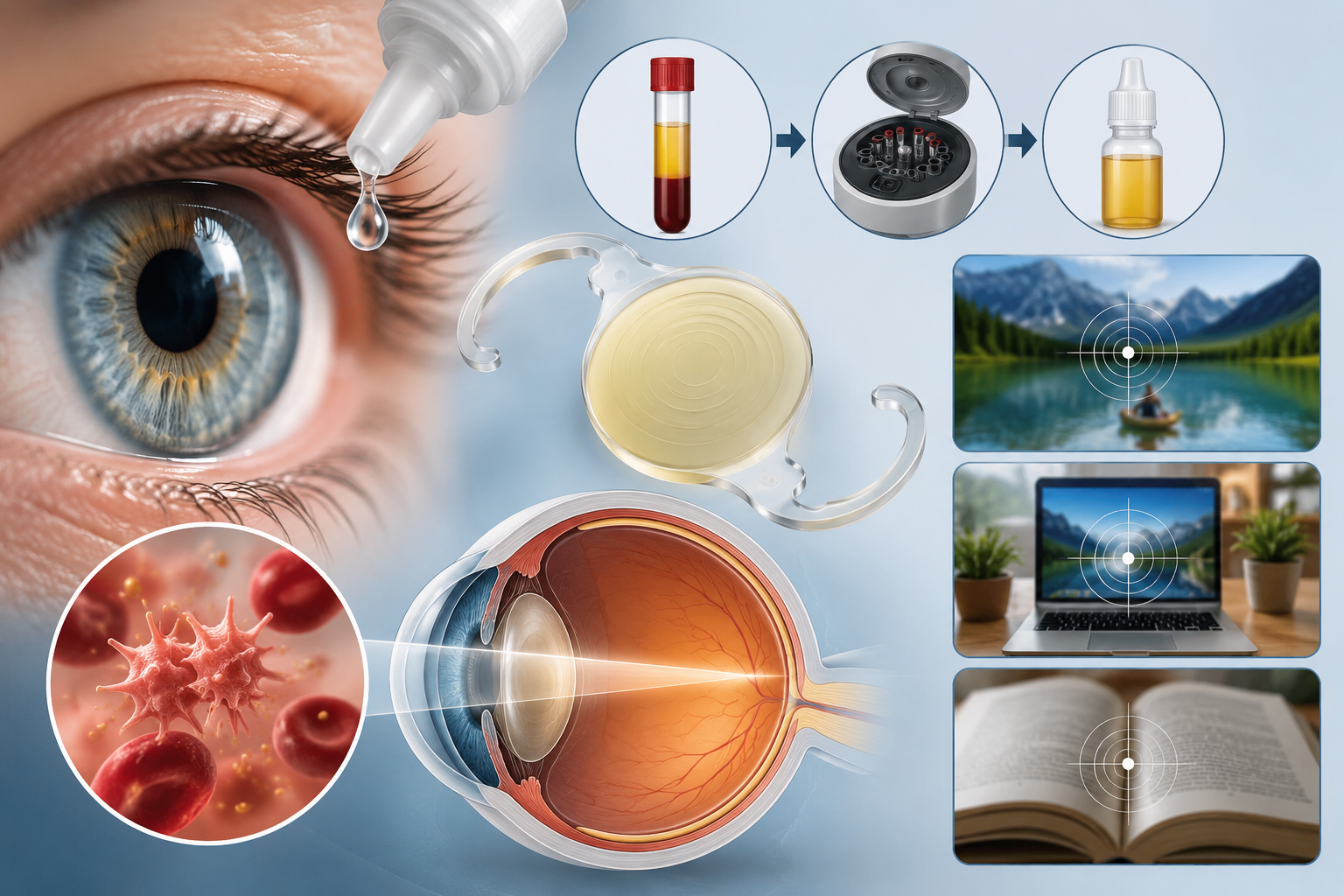
Unlike synthetic tears that only temporarily moisten the surface, autologous PRP is derived from the patient's own blood and is rich in growth factors (PDGF, TGF-β, EGF, FGF) and bioactive cytokines. These components promote cell proliferation, migration and differentiation, inducing physiological and accelerated epithelial healing.
Conclusion for physicians and patients: Autologous PRP eye drops are a safe, preservative-free and highly effective autologous biological therapy for the management of neurotrophic and refractory post-LASIK dry eye.
Comments